Astro Academy's 10th Anniversary: Tim Peake Q&A with our Space Engineers
- 29th Jun 2026
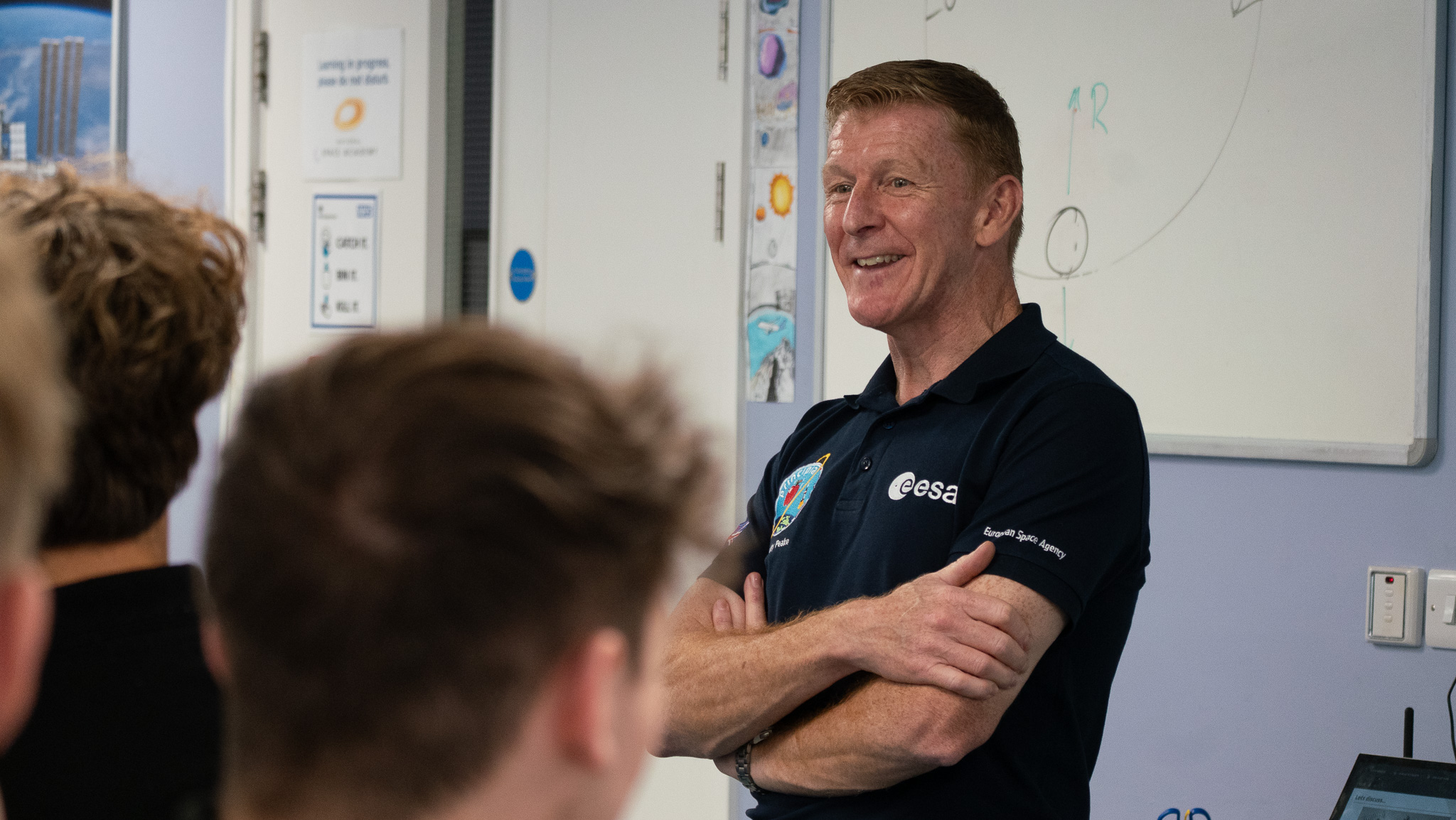
Ten years on from Tim Peake's splash down after his safe return from space and our Space Engineering first years were lucky enough to have an exclusive 45 minutes to quiz Tim on his experiences. NSA Lead Physics Practitioner Natalie Tunnicliffe reports on this fantastic experience...
With a military background flying as a test pilot, Tim was selected to join the European Space Agency Astronaut Class of 2009. After arduous training, he then spent six months on board the International Space Station (ISS), living and working in microgravity. Whilst there he completed over 250 experiments as well as a space walk to complete repairs.
During the time he was onboard the ISS, the National Space Academy were lucky enough to receive a portion of Tim's allotted experimental time to create an educational resource package. This consisted of a series of videos of experiments done both here on Earth in our lab, and also by Tim in space. This enabled several principles to be demonstrated that are much harder to show on Earth due to the Earth's gravitational field and the atmosphere all around us. Ten years later and these videos are still being used in the classroom to enhance the GCSE and A level physics curricula.
In order to make these experiments happen, the equipment had to endure a long and laborious design and testing process before it could travel to space, ready for Tim when he arrived.
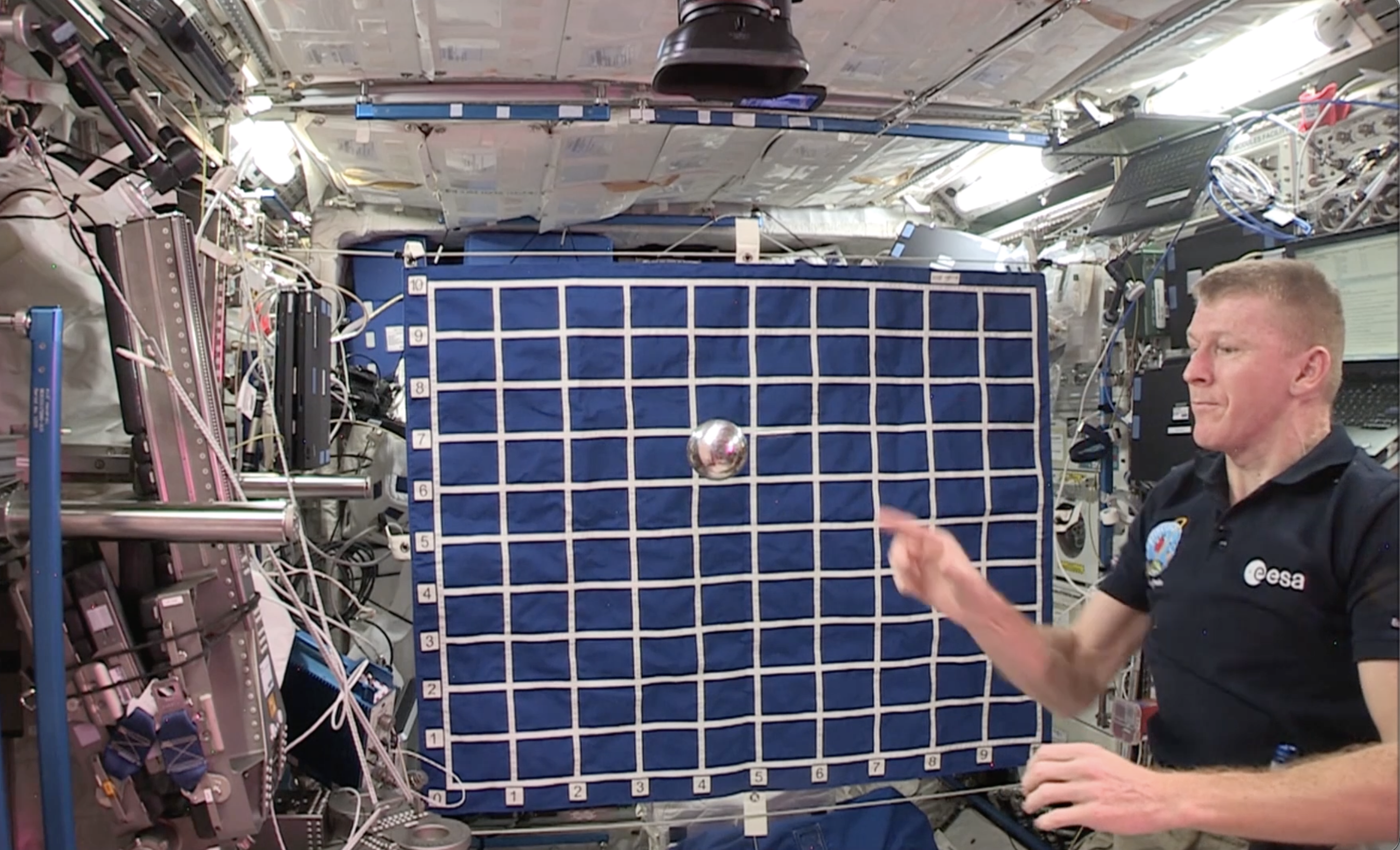
At the start of our ten year celebration session at the National Space Centre, our Head of Teaching and Learning, Sophie Allan, recalled this process to our Space Engineers. She told the story of the immense amount of work that went into getting the kit launch ready, only for the rocket transporting the equipment to explode during launch! After a hurried recreation, the equipment was then safely shipped on second attempt, ready for Tim when he arrived.
After their introduction to the Astro Academy Principia mission, students were given a replica of the kit that went to space and asked to predict which scientific principle each piece of the kit was used to demonstrate. There were some fantastic suggestions and we selected the ball on a string and ball on a track to start looking at further mechanics in more detail, in preparation for second year A level physics.
Before our special Q&A with Tim, students looked at some of the basics of circular motion, using the Astro Academy videos to compare what happens here on Earth and up in space as objects travel in a circle. They also did an experiment where they had to spin cups full of water above their heads and use their new knowledge to (just about) keep each other dry!
As the students finished up their final activity, the guest of the day arrived at the door just in time to tell a story about some of the equipment the students were using. He told the tale of how during the experiments, he accidentally smashed a container of M&Ms, that had been used to represent particles, and hundreds of sweets went flying around the module, many of which were lost floating for several days and hadn’t made him particularly popular with his crew mates!
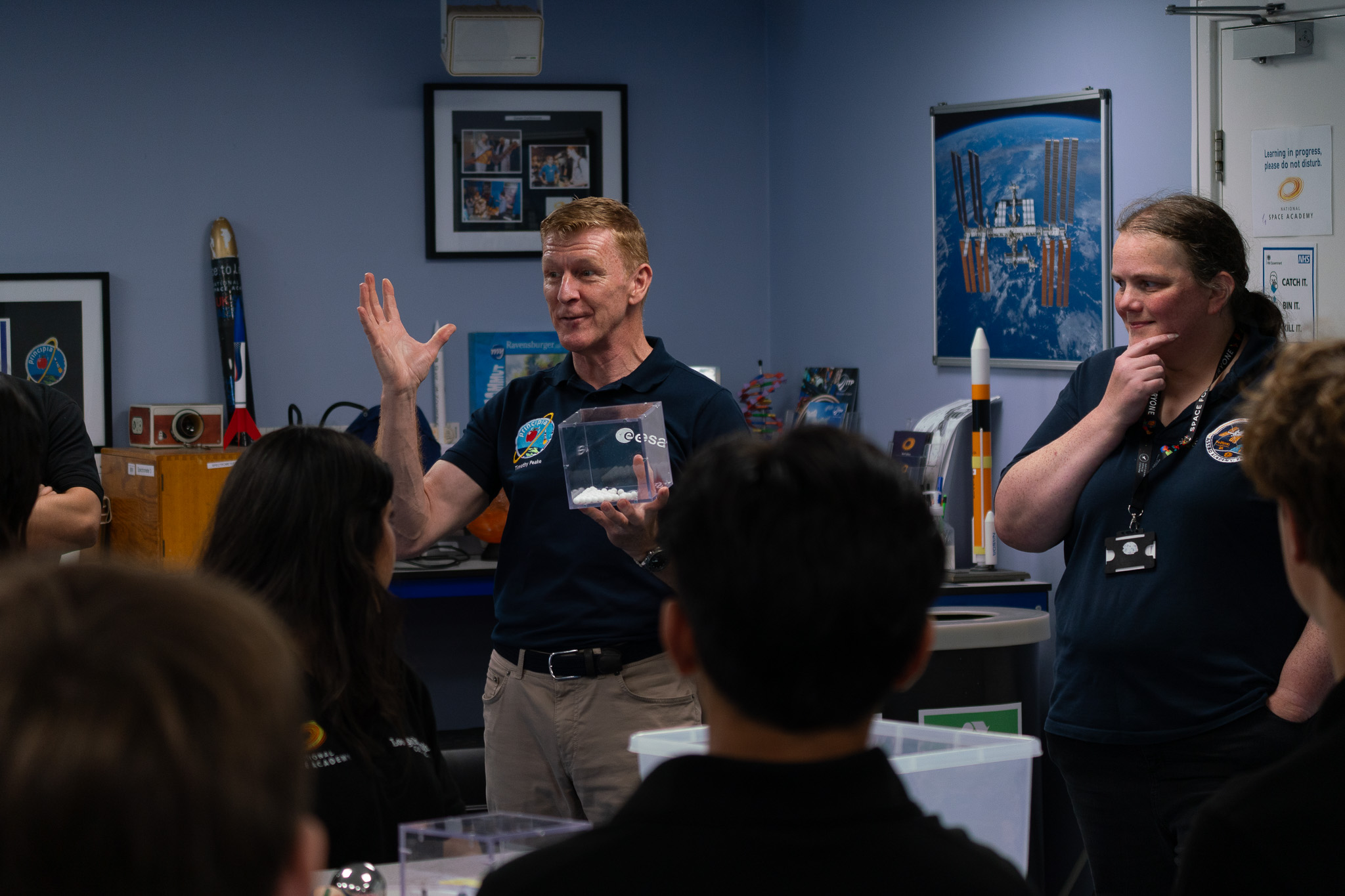
In preparation for the session, our students had taken time to consider what they would like to ask Tim, and a list of questions was carefully curated.
One of our Students, Rayyan, asked how Tim adjusted to returning to the Earth’s gravity after spending so long in microgravity. Whilst it is common for astronauts to often ‘forget’ about gravity on return and drop things, Tim reported that the opposite actually happened for him. He found things extremely heavy and therefore held onto things even tighter than before. He recalled in particular picking up an iPad to complete some work and wondering what it was made of to be so heavy!
Several students also wanted to know more about the training involved in becoming an astronaut, asking, ‘What the hardest part of astronaut training was’. Tim responded that for him personally, it was learning Russian. He said that while there is an immense amount of technical information that you have to retain, he found these details much easier to comprehend than learning a new language.
As the last National Space Centre lesson of the year for our first years, what a fantastic way it was to end the year! The Space Engineering students enjoyed a fascinating session in the lab and are very grateful to Tim for his time and this very special opportunity.
I would also just like to take this occasion to say a massive well done to our first years on successfully completing their first year and combatting all the challenges this year has brought them.